


Most people grab a pair of flat slides without thinking twice, but the wrong pair can quietly wreck your feet over time. Cushioned slides absorb 37% more impact than traditional footwear, reducing stress on your feet, knees, ankles, and hips. That’s not a small difference. Whether you’re recovering after a workout, running errands, or just want something comfortable to wear around the house, the structure of your slide matters more than most people realize. This article breaks down the science, the shopping tips, and the daily habits that help you get the most out of cushioned slides without sacrificing your style.
Table of Contents
- Why footwear choices matter for foot health
- Science-backed benefits of cushioned slides
- Fashion vs. function: Choosing the right cushioned slides
- Common pitfalls: Over-cushioning and safe usage tips
- How cushioned slides fit into your daily routine
- Discover stylish slides for comfort and foot health
- Frequently asked questions
Key Takeaways
| Point | Details |
|---|---|
| Choose cushioned slides | Slides with proper cushioning and support reduce pain, impact, and joint stress. |
| Balance style and health | APMA-approved slides blend fashion trends with proven ergonomic benefits for foot wellness. |
| Avoid over-cushioning | Too much cushion can lead to instability, fatigue, and higher risk of injury. |
| Use slides smartly | Wear cushioned slides for recovery and casual use, but prioritize structured shoes for longer periods. |
Why footwear choices matter for foot health
Slides have gone from poolside accessory to everyday staple. You see them everywhere: on campus, at the gym, at brunch. But just because they’re popular doesn’t mean every pair is good for your feet. The difference between a cushioned slide and a flat one is bigger than it looks.
Flat slides with no arch support force your foot muscles to work overtime just to keep you stable. Over time, that extra strain leads to real problems. Unsupportive flat slides cause plantar fasciitis, heel pain, poor shock absorption, and injury risk from toe gripping and slipping. Plantar fasciitis is inflammation of the thick band of tissue running along the bottom of your foot, and it’s one of the most common causes of heel pain in active adults.
“The way your foot contacts the ground with every step sends a chain reaction up through your ankles, knees, and hips. Unsupportive footwear disrupts that chain.”
Here’s what makes cushioned slides different from flat ones:
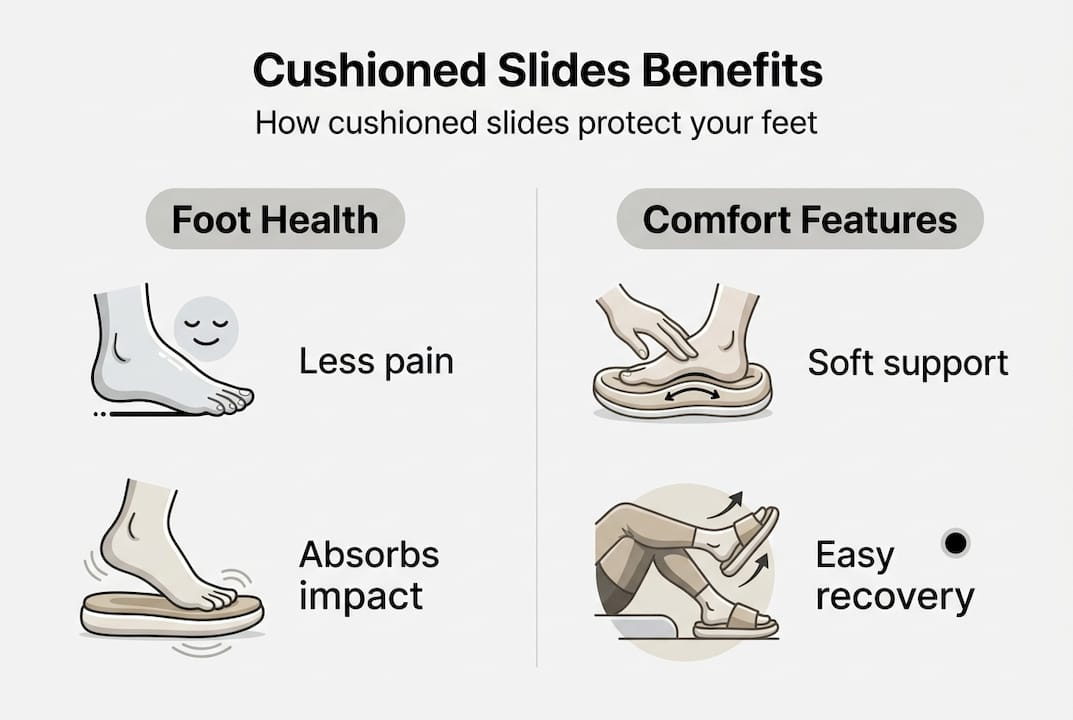
- Cushioned footbed: Absorbs impact energy so your joints don’t have to
- Arch support: Keeps your foot in a neutral, aligned position
- Contoured sole: Guides natural foot movement instead of fighting it
- Wider strap: Reduces the need to grip with your toes for stability
When you’re choosing cushioned slides, understanding these structural differences helps you shop smarter. The ergonomic slide benefits go beyond comfort. They’re about protecting your body from the ground up.
Science-backed benefits of cushioned slides
The research on cushioned footwear is clear and consistent. It’s not just about feeling soft underfoot. Cushioning changes how your body handles impact with every single step.
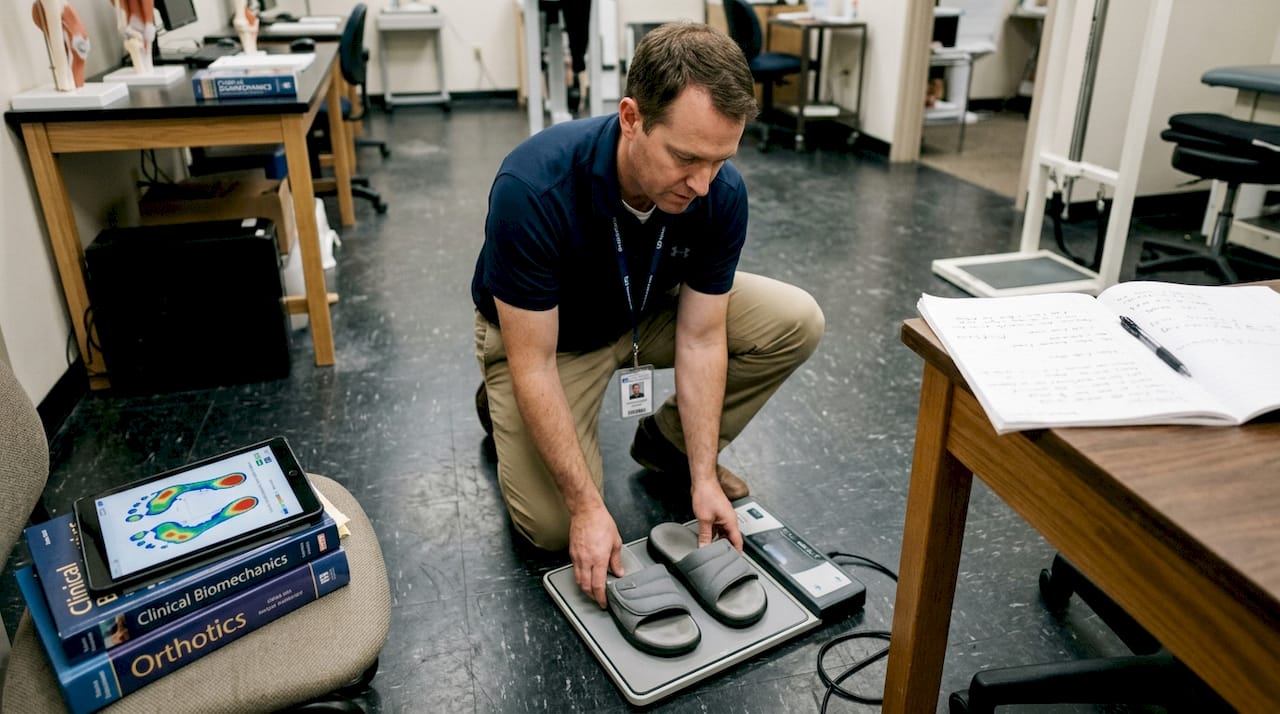
Biomechanical studies show cushioning reduces peak vertical impact by approximately 12% and loading rate by about 11% during walking and running. Loading rate refers to how quickly force builds up in your foot and leg when you step down. A lower loading rate means less sudden stress on your joints, which is a key factor in preventing impact-related injuries over time.
37% more impact absorption compared to traditional footwear is the headline stat for quality cushioned slides. That number translates directly into less fatigue, less joint pain, and faster recovery after physical activity.
Here’s a quick comparison of how different slide types stack up:
| Feature | Flat slides | Cushioned slides | Orthopedic slides |
|---|---|---|---|
| Shock absorption | Low | High | Very high |
| Arch support | None | Moderate | High |
| Recovery benefit | None | Strong | Strong |
| Style variety | High | High | Low |
| Daily wear comfort | Low | High | Moderate |
For athlete slide preferences, cushioned slides are the go-to choice after training sessions. The reason is simple: your muscles and joints need a break from the rigid structure of athletic shoes, but you still need support. Cushioned slides hit that sweet spot. Stylish ergonomic slides now come in bold colorways and streetwear-ready designs, so you don’t have to choose between looking good and feeling good.
The APMA Seal of Acceptance from the American Podiatric Medical Association is one of the most reliable markers of foot-friendly footwear. When a slide earns that seal, it means podiatrists have reviewed and approved its design for promoting good foot health.
Fashion vs. function: Choosing the right cushioned slides
Knowing the science is one thing. Actually finding slides that look great and support your feet is where most people get stuck. The good news is that the gap between fashion and function has never been smaller.
Here are the key features to prioritize when shopping:
- Arch support: Look for a raised arch contour built into the footbed, not just a flat foam layer
- Sole thickness: A sole between 25mm and 35mm offers the best balance of cushioning and stability
- Material quality: EVA foam and memory foam are top choices for shock absorption and durability
- Strap width and fit: A wider strap distributes pressure evenly and prevents toe gripping
- APMA Seal: Prioritize slides that carry this approval for verified foot health benefits
Recovery slides like APMA-approved options offer stylish casual wear for post-workout recovery and daily use, balancing comfort with joint alignment. That’s the standard to aim for.
Pro Tip: Before buying, press your thumb firmly into the footbed. If it compresses more than halfway with light pressure, the cushioning may be too soft to provide real support during extended wear.
Check out these luxury slide shopping tips to narrow down your options without overspending. You can also explore slides style and comfort trends to see what’s driving the market right now. Understanding premium slides features helps you tell the difference between a slide that looks premium and one that actually performs.
Common pitfalls: Over-cushioning and safe usage tips
More cushioning isn’t always better. This surprises a lot of people, but the research backs it up.
Excessive cushioning may increase impact peak, alter joint stiffness, reduce stability, increase ground contact time, and raise injury risk. When a sole is too soft, your foot sinks in unpredictably with each step. That instability forces your ankle and knee to compensate, which can lead to new problems even as you try to solve old ones.
“The goal isn’t maximum softness. It’s the right amount of cushioning for your body weight, activity level, and foot type.”
Here’s how to use cushioned slides safely:
- Limit continuous wear to 2 to 3 hours at a stretch, especially on hard surfaces
- Alternate with structured shoes on days when you’re on your feet for long periods
- Check for wear patterns on the sole every few months. Uneven wear signals alignment issues
- Avoid using slides for high-impact activities like running or jumping, even if they feel comfortable
- Pair with arch support insoles if you have flat feet or high arches for added stability
Cushioned slides are optimal for short-term indoor and outdoor use, and they’re far better than flat slides, but they’re not a substitute for structured shoes during extended activity. Use them strategically.
Pro Tip: If you notice your calves or lower back feeling tight after wearing slides all day, that’s a sign you’ve exceeded the safe wear window. Switch to a supportive sneaker and give your feet a reset.
For people dealing with chronic foot fatigue, learning how to reduce foot fatigue through smart material choices makes a real difference. If you have flat feet specifically, there are slides for flat feet designed with extra medial support to keep your arch from collapsing.
How cushioned slides fit into your daily routine
Now that you know what to look for and what to avoid, here’s how to actually build cushioned slides into your lifestyle in a way that supports your health.
- Post-workout recovery: Slip into cushioned slides immediately after training. Your feet and joints are inflamed after exercise, and the reduced impact load helps speed up recovery
- Morning routine: Wearing slides first thing in the morning on hard floors protects your plantar fascia before it’s fully warmed up
- Casual errands: For short trips under two hours, cushioned slides are a comfortable and stylish alternative to sneakers
- Travel days: Airports and transit involve a lot of standing and walking on hard floors. Cushioned slides are ideal for the gate and the hotel room
- Pairing strategy: On longer days, start with structured shoes and switch to cushioned slides in the evening to decompress your joints
Heel cushioning in orthoses reduces hindfoot pressure significantly in plantar fasciitis patients, which confirms that the right cushioning in the right place makes a measurable clinical difference. Cushioned slides with arch support and shock absorption reduce foot pain and plantar fasciitis symptoms for recovery and everyday wear.
Pro Tip: Rotate between two pairs of cushioned slides if you wear them daily. Foam needs time to decompress and regain its shape. Rotating extends the life of both pairs and keeps the cushioning effective longer.
For style-conscious wearers, trending slides and comfort are no longer competing priorities. The best slides on the market right now deliver both without compromise.
Discover stylish slides for comfort and foot health
You’ve got the knowledge. Now it’s time to put it into action with slides that actually deliver on both style and support. At DracoSlides, we design every pair with cushioned footbeds, durable outsoles, and bold aesthetics built for real life, whether that’s post-gym recovery, weekend outings, or just moving through your day in comfort.
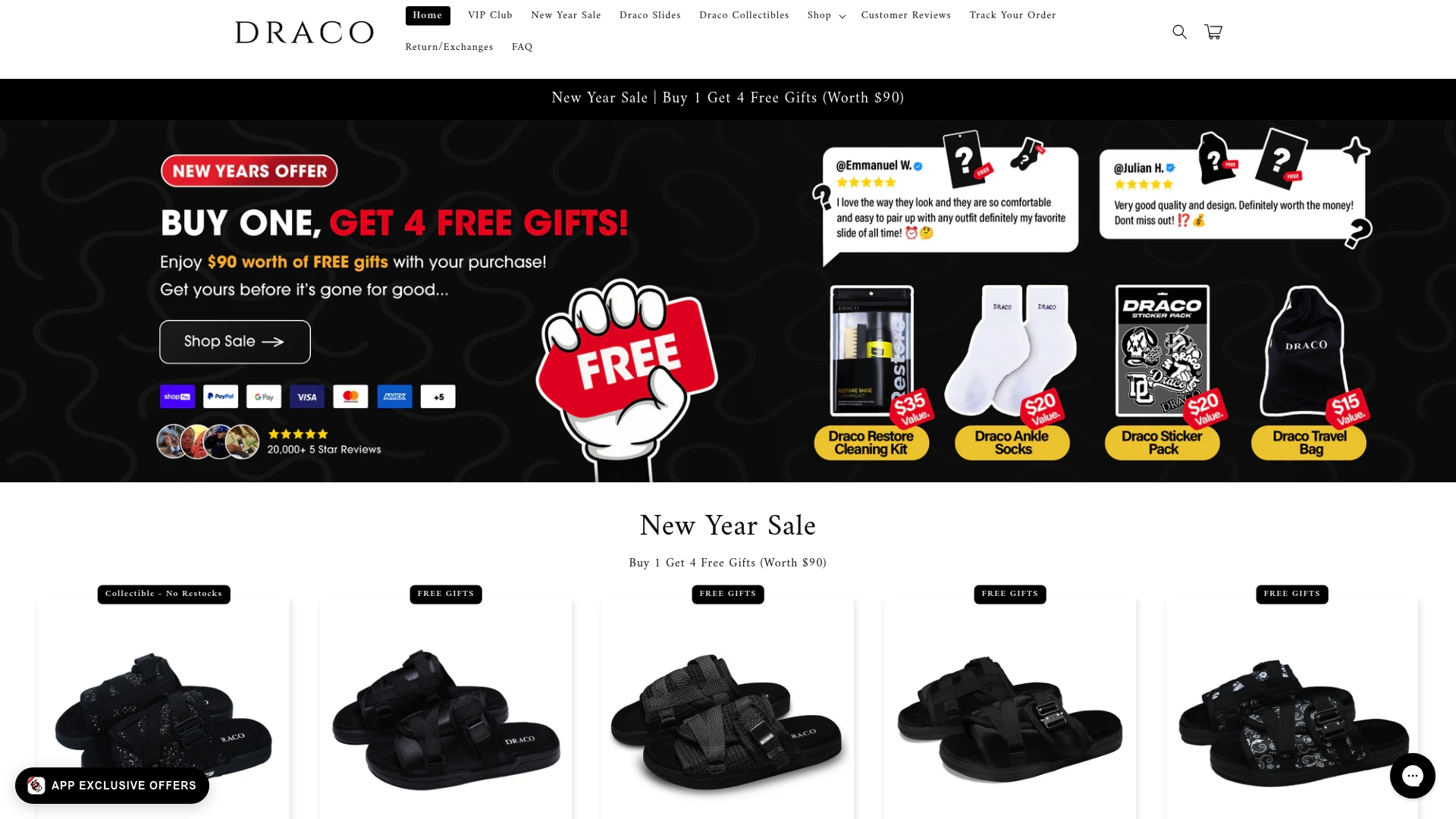
Our Draco+ cushioned slides are built with the features that matter most: arch-contoured footbeds, shock-absorbing EVA soles, and wide-strap designs that keep your foot secure without the toe-gripping struggle. Pair them with gear from our slide accessories collection to complete the look. Limited colorways sell out fast, so if you see your size, don’t wait.
Frequently asked questions
Do cushioned slides help with plantar fasciitis?
Yes. Heel cushioning reduces hindfoot pressure significantly in plantar fasciitis patients, and slides with arch support and shock absorption can ease symptoms during recovery and daily wear.
Are cushioned slides good for everyday use?
Cushioned slides are great for short-term everyday wear and post-workout recovery, but limit prolonged wear and alternate with structured shoes for extended activity to avoid fatigue.
Can slides be too cushioned?
Yes. Excessive cushioning reduces stability and can increase ground contact time and injury risk. The right cushioning level depends on your body weight, foot type, and activity.
What features should I look for in supportive slides?
Prioritize arch support, an ergonomic sole design, quality EVA foam cushioning, and the APMA Seal of Acceptance for verified foot health benefits.


