


Most people assume slides are just something you throw on at the beach or after a shower. But professional athletes use slides post-race specifically to let their feet breathe, reduce soreness, and accelerate recovery, especially after brutal efforts like ultramarathons. That’s not casual footwear logic. That’s sports science in action. In this article, we’ll break down exactly why slides have become a staple in every serious athlete’s gear bag, covering the biomechanics, the foam technology, real athlete experiences, and how to pick the right pair for your needs.
Table of Contents
- What makes slides uniquely beneficial for athletes?
- Science-backed comfort: How slides enhance post-workout recovery
- Real athlete experiences: From post-marathon pain relief to daily wear
- Choosing the best slides for your needs: Comfort, style, and recovery
- Explore recovery slides and accessories for athletes
- Frequently asked questions
Key Takeaways
| Point | Details |
|---|---|
| Post-workout recovery boost | Slides help athletes recover faster by reducing fatigue and muscle strain. |
| Advanced materials matter | Specialized foams like OOfoam and EVA provide superior impact absorption and pain relief. |
| Style meets function | Athletes can choose slides that combine recovery benefits with comfort and everyday style. |
| Durability differences | Premium slides last much longer and offer consistent support compared to budget options. |
What makes slides uniquely beneficial for athletes?
Slides aren’t just open-toed shoes. They’re engineered recovery tools, and the difference shows up in how your feet feel the morning after a hard training session.
The biggest mechanical advantage comes from meta-rocker geometry. This curved sole design promotes a smooth rolling gait, reducing strain on muscles and tendons with every step. Instead of your foot absorbing a flat, jarring impact, the rocker shape guides your foot through a natural motion cycle. Think of it like the difference between walking on a flat board versus a gently curved rocking chair base.
Foam technology is the other major factor. OOfoam absorbs 37% more impact than traditional foams and reduces energy exertion on ankles by 47%. That’s a significant reduction in the cumulative stress your joints absorb during post-workout movement. Fatigue-reducing EVA foam works similarly, offering lightweight cushioning that doesn’t compress flat after a few hours of wear.
Here’s how slides stack up against other footwear options for post-workout use:
| Feature | Slides | Sneakers | Sandals |
|---|---|---|---|
| Impact absorption | High (EVA/OOfoam) | Moderate | Low |
| Foot freedom | Full | Restricted | Partial |
| Ease of use | Slip-on | Lace-up | Buckle/strap |
| Arch support | Moderate to high | High | Low |
| Breathability | Excellent | Moderate | Excellent |
| Recovery focus | Primary purpose | Secondary | None |
Key benefits of cushioned slides for comfort during recovery include:
- Reduced joint compression from specialized foam layers
- Improved circulation due to open design and pressure relief
- Faster transition from workout to recovery without tight laces or straps
- Natural foot positioning that supports the arch without overcorrecting
The ergonomic benefits go beyond comfort. They actively support the body’s natural recovery process by reducing the mechanical load on fatigued tissue.
Science-backed comfort: How slides enhance post-workout recovery
Recovery isn’t passive. Your body is actively repairing muscle fibers, clearing metabolic waste, and restoring circulation. The footwear you choose during that window either supports or slows that process.
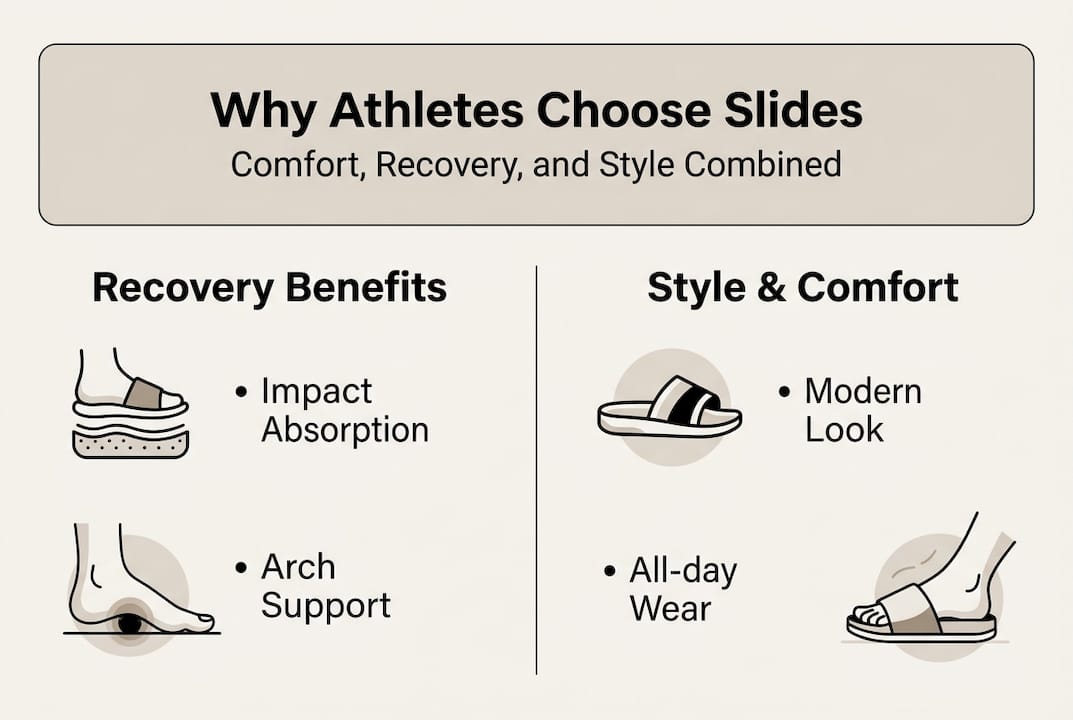
Specialized foams like OOfoam or EVA absorb impact, improve circulation, and provide arch support for faster recovery. When your feet aren’t fighting against hard floors or rigid soles, blood flow improves and inflammation decreases more efficiently. That’s not a marketing claim. That’s basic biomechanics.
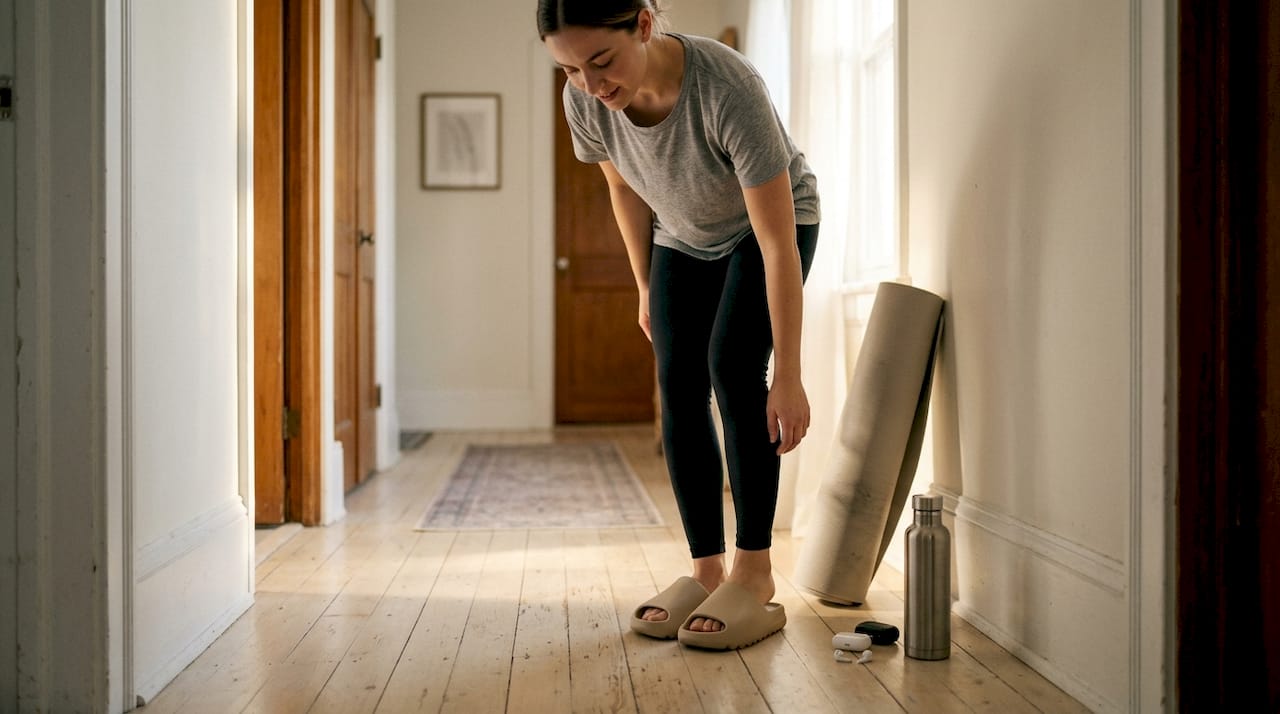
Podiatrists recommend brands like OOFOS specifically for their shock absorption, arch support, and APMA (American Podiatric Medical Association) Seal, which signals clinically recognized benefits for alignment in the feet, knees, and hips. When a podiatrist recommends a slide over a sneaker for recovery, that’s worth paying attention to.
Here’s what the data shows on foam performance:
| Foam type | Impact absorption | Durability | Weight | Best for |
|---|---|---|---|---|
| OOfoam | 37% above standard | 2+ years | Light | Maximum recovery |
| EVA foam | High | 1-2 years | Very light | Everyday comfort |
| Standard rubber | Low | 3+ years | Heavy | Casual use only |
| Memory foam | Moderate | Under 1 year | Moderate | Short-term comfort |
Here’s the sequential recovery process when you switch to slides after a workout:
- Pressure relief kicks in immediately as the foam contours to your foot shape
- Circulation improves as the open design removes compression from the top of the foot
- Muscle tension decreases as the rocker sole reduces the need for active stabilization
- Arch support activates to maintain proper alignment without forcing your foot into a fixed position
- Inflammation reduces over 30 to 60 minutes as blood flow normalizes
“Recovery footwear isn’t about doing nothing. It’s about giving your body the right environment to do its job faster.” This is exactly why ergonomic slide choices have moved from niche athletic gear to mainstream recovery essentials.
Pro Tip: Put your slides on within 10 minutes of finishing your workout. The sooner you reduce foot compression and improve circulation, the faster your recovery window activates. Don’t wait until you’re already sore.
For athletes who want both function and aesthetics, designer-inspired slides now deliver the same recovery-grade cushioning in bold, streetwear-ready colorways. You don’t have to choose between looking good and recovering well.
Real athlete experiences: From post-marathon pain relief to daily wear
Laboratory data tells part of the story. Real athletes tell the rest.
Post-marathon users report significant pain relief after switching to quality recovery slides, with premium options like OOFOS lasting more than two years before any noticeable foam degradation. Cheaper alternatives tend to compress flat within months, losing their cushioning effect and offering little more than a thin rubber sole. The difference in long-term value is clear.
Runners and professional athletes consistently reach for slides after races to let their feet breathe and reduce soreness, particularly after high-mileage events. The open design isn’t just comfortable. It’s functional, allowing heat and moisture to escape from feet that have been locked inside shoes for hours.
Here’s what athletes consistently highlight about their slide experience:
- Immediate relief from plantar pressure after long runs or heavy lifting sessions
- Reduced morning stiffness when slides are worn for 1 to 2 hours post-workout
- Versatility from gym bag to grocery run without changing footwear
- Durability that outlasts budget foam options by 12 to 18 months on average
But slides aren’t perfect for every situation. Slides excel for indoor recovery and light active use but perform poorly for driving, hiking, or wet outdoor environments. The open back means less control, and the soft foam can feel unstable on uneven terrain. Hoka’s recovery slides tend to offer more structural stability, while OOFOS prioritizes maximum softness. Neither is universally better. It depends on what your feet need.
“After a 50-mile race, I don’t want anything touching my feet except the softest foam I can find. Slides are the only thing that makes the next day manageable.”
Pro Tip: If you train in multiple disciplines, consider owning two pairs of slides. Use a softer, high-cushion pair for immediate post-workout recovery and a slightly firmer pair for casual daily wear. Your feet will thank you by race day.
The slides trend story has evolved well beyond gym culture. What started as locker room footwear is now a full streetwear category, and the top slide options now blend athletic performance with bold visual identity.
Choosing the best slides for your needs: Comfort, style, and recovery
Not every slide is built the same, and the wrong choice can leave you with flat foam and sore feet within weeks. Here’s how to cut through the noise.
Premium recovery slides are ideal for high-volume athletes and lifters with heavily worked feet, but they may be overkill for someone who trains twice a week on flat surfaces. Knowing your use case saves you money and gets you the right tool for the job.
When evaluating slides, prioritize these features in order:
- Foam density and type: EVA and OOfoam outperform standard rubber for recovery. Check the product specs, not just the marketing copy.
- Arch support profile: Flat footbeds feel good initially but don’t support alignment. Look for a contoured footbed with a defined arch zone.
- APMA Seal: This certification means podiatrists have reviewed and approved the design for foot health. It’s a reliable quality signal.
- Strap width and grip: A wider strap distributes pressure more evenly and reduces friction on the top of the foot.
- Outsole grip: Especially important if you’ll wear slides on wet pool decks or gym floors.
- Colorway and design: Style matters. If you love how they look, you’ll actually wear them consistently.
Price is a real consideration. Budget slides under $30 typically use low-density foam that compresses quickly. Mid-range options between $50 and $100 hit the sweet spot for most athletes, offering genuine cushioning without the premium markup. Above $100, you’re paying for brand positioning as much as performance.
Pro Tip: Try slides on in the afternoon or evening when your feet are naturally slightly swollen from daily activity. This gives you a more accurate fit for post-workout use, when your feet are at their largest and most fatigued.
For a deeper breakdown of what separates budget from premium options, the luxury slide guide covers the key differences in materials and construction. And if you want to understand exactly what separates a well-built slide from a cheap imitation, premium slide features breaks it down clearly.
Foot type also matters. If you have flat arches, prioritize slides with a higher arch support profile. High-arch athletes need more cushioning depth to prevent pressure points. Neutral arches have the most flexibility and can work with almost any quality slide.
Explore recovery slides and accessories for athletes
You’ve got the science, the athlete feedback, and the selection criteria. Now it’s time to put it into practice. At DracoSlides, we’ve built our entire line around the same principles covered in this article: real cushioning, bold design, and footwear that works as hard as you do.
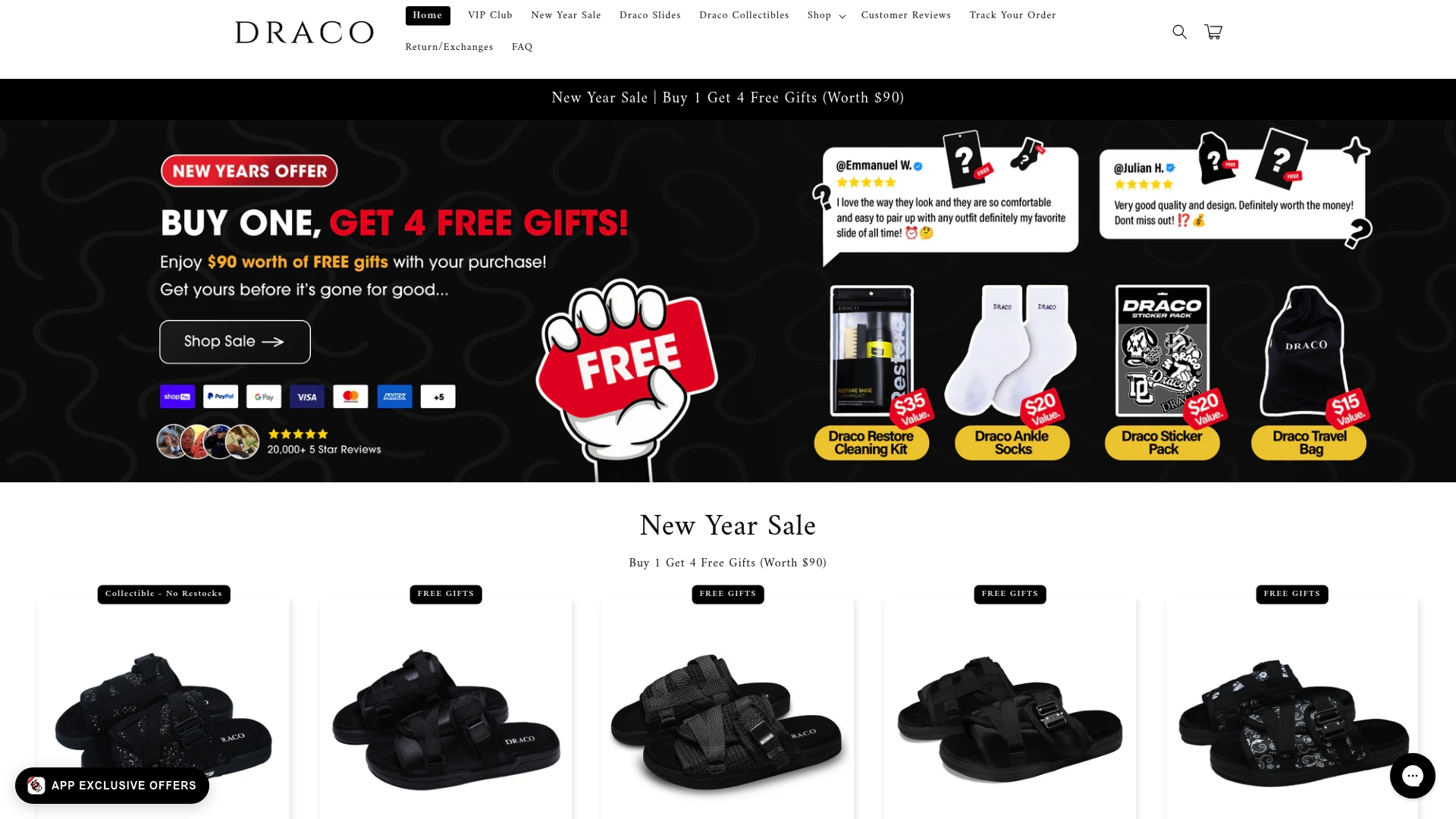
Our best-selling slides are designed for athletes who refuse to compromise between recovery performance and streetwear style. Pair them with our recovery accessories including cushioned socks, grip-enhancing insoles, and carry bags built for gym-to-street transitions. Whether you’re coming off a marathon, a heavy lift, or just a long day on your feet, the right slide makes the difference. Browse all slides and find your perfect recovery pair today.
Frequently asked questions
What makes slides better for post-workout recovery than sneakers?
Slides use specialized foams that absorb 37% more impact and improve circulation, while their open design removes compression from fatigued feet. Sneakers keep feet locked in a rigid structure that limits blood flow and natural movement during recovery.
Are slides suitable for everyday wear or just after exercise?
Slides work well for both post-workout recovery and casual daily use, but slides perform poorly in wet outdoor environments, on uneven terrain, and while driving due to their open-back design.
How long do quality recovery slides typically last?
Premium recovery slides last more than two years with regular use before foam degradation becomes noticeable, while budget options often compress flat within a few months.
What features should I look for in slides to aid recovery?
Prioritize impact-absorbing foam, a contoured arch support footbed, breathable materials, and the APMA Seal as a clinically recognized indicator of foot health benefits.


